Intellectual Conservative:
"While the 'mega-mosque' may signify for the Muslim the triumph of Islam over the Infidel, for the leftist it marks a decisive victory in the storied campaign to 'fundamentally transform' our civilization into the post-Christian, post-'capitalist,' 'multicultural' utopia that he longs for it to be."
Tuesday, August 31, 2010


Kelo consequences
From Cato: "We break it -- you buy it."
Christina Walsh:
"Imagine you come home from work one day to a notice on your front door that you have 45 days to demolish your house, or the city will do it for you. Oh, and you’re paying for it.
This is happening right now in Montgomery, Ala., and here is how it works: The city decides it doesn’t like your property for one reason or another, so it declares it a 'public nuisance.' It mails you a notice that you have 45 days to demolish your property, at your expense, or the city will do it for you (and, of course, bill you).
Your tab with the city will constitute a lien on your property, and if you don’t pay it within 30 days . . . the city can sell your now-vacant land to the highest bidder."
Christina Walsh:
"Imagine you come home from work one day to a notice on your front door that you have 45 days to demolish your house, or the city will do it for you. Oh, and you’re paying for it.
This is happening right now in Montgomery, Ala., and here is how it works: The city decides it doesn’t like your property for one reason or another, so it declares it a 'public nuisance.' It mails you a notice that you have 45 days to demolish your property, at your expense, or the city will do it for you (and, of course, bill you).
Your tab with the city will constitute a lien on your property, and if you don’t pay it within 30 days . . . the city can sell your now-vacant land to the highest bidder."
Our old friend Jerry Weast moves on -- again
Washington Examiner:"Weast legacy: Doing less with more."
Noteworthy:
"Only in a region where government-at-all-levels is the biggest employer would spending more and achieving less be considered an accomplishment.
Which story do you think most accurately represents the Jerry Weast we knew and "loved"?
On a side note, I wonder what Terry Grier is up to these days?
Noteworthy:
"Only in a region where government-at-all-levels is the biggest employer would spending more and achieving less be considered an accomplishment.
Worst of all, Weast's rocky relationship with parents and school board members has been variously described as "bullying" and "imperial." And an Examiner editor dubbed his lamentable efforts to dismantle the district's gifted-students program as "Leave No Child Ahead." Obviously, it was past time for Weast to move on."
Which story do you think most accurately represents the Jerry Weast we knew and "loved"?
On a side note, I wonder what Terry Grier is up to these days?
Monday, August 30, 2010
Here's what Daniel Pearl's father thinks
"Overall, the message that emerges from this discourse can hardly be missed: When Muslim grievance is at question, America is the culprit."
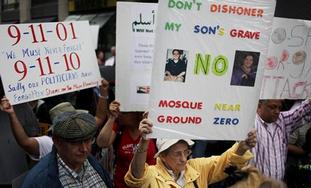
"...If one accepts that the 19 fanatics who flew planes into the Twin Towers were merely self-proclaimed Muslims who, by their very act, proved themselves incapable of acting in the name of 'true Islam,' then building a mosque at Ground Zero should evoke no emotion whatsoever; it should not be viewed differently than, say, building a church, a community center or a druid shrine.
A more realistic explanation is that most Americans do not buy the 19 fanatics story, but view the the 9/11 assault as a product of an anti- American ideology that, for good and bad reasons, has found a fertile breeding ground in the hearts and minds of many Muslim youngsters who see their Muslim identity inextricably tied with this anti-American ideology.
The Ground Zero mosque is being equated with that ideology. Public objection to the mosque thus represents a vote of no confidence in mainstream American Muslim leadership which, on the one hand, refuses to acknowledge the alarming dimension that anti-Americanism has taken in their community and, paradoxically, blames America for its creation."
"...If one accepts that the 19 fanatics who flew planes into the Twin Towers were merely self-proclaimed Muslims who, by their very act, proved themselves incapable of acting in the name of 'true Islam,' then building a mosque at Ground Zero should evoke no emotion whatsoever; it should not be viewed differently than, say, building a church, a community center or a druid shrine.
A more realistic explanation is that most Americans do not buy the 19 fanatics story, but view the the 9/11 assault as a product of an anti- American ideology that, for good and bad reasons, has found a fertile breeding ground in the hearts and minds of many Muslim youngsters who see their Muslim identity inextricably tied with this anti-American ideology.
The Ground Zero mosque is being equated with that ideology. Public objection to the mosque thus represents a vote of no confidence in mainstream American Muslim leadership which, on the one hand, refuses to acknowledge the alarming dimension that anti-Americanism has taken in their community and, paradoxically, blames America for its creation."
Saturday, August 28, 2010
"In Georgia, a Victory for Citizenship Verification"
It looks like the Illegal Immigrant Amnesty/Get Out The Vote drive the Democrats are dreaming about isn't going to happen these next several election cycles.
Noteworthy:
"The Justice Department had not even filed an answer to the complaint before it agreed to settle. When the Voting Section of the Civil Rights Division first objected to Georgia’s verification process, sources told me that it had virtually no supporting evidence. Instead, the objection was driven by the ideology of the lawyers handling the Section 5 review process, including Deputy Chief Bob Berman. They wanted to please their allies in the liberal advocacy world, such as the Mexican American Legal Defense Fund and La Raza, which object to such verification and were gambling that Georgia would just accept the objection. They were very worried that if Georgia sued, the Division would lose the case in court."
I'm interested to see if Deputy Chief Bob Berman is the same guy I knew from my racing days back in the 70s and 80s.
Noteworthy:
"The Justice Department had not even filed an answer to the complaint before it agreed to settle. When the Voting Section of the Civil Rights Division first objected to Georgia’s verification process, sources told me that it had virtually no supporting evidence. Instead, the objection was driven by the ideology of the lawyers handling the Section 5 review process, including Deputy Chief Bob Berman. They wanted to please their allies in the liberal advocacy world, such as the Mexican American Legal Defense Fund and La Raza, which object to such verification and were gambling that Georgia would just accept the objection. They were very worried that if Georgia sued, the Division would lose the case in court."
I'm interested to see if Deputy Chief Bob Berman is the same guy I knew from my racing days back in the 70s and 80s.
Friday, August 27, 2010
James Taranto: "Why the liberal elite finds Americans revolting"
He thinks it's Oikophobia.
Noteworthy:
"The Ground Zero mosque is an affront to the sensibilities of ordinary Americans. 'The center's association with 9/11 is intentional and its location is no geographic coincidence,' as the Associated Press has reported. That Americans would find this offensive is a matter of simple common sense. The liberal elites cannot comprehend common sense, and, incredibly, they think that's a virtue. After all, common sense is so common.
The British philosopher Roger Scruton has coined a term to describe this attitude: oikophobia. Xenophobia is fear of the alien; oikophobia is fear of the familiar: 'the disposition, in any conflict, to side with "them" against "us", and the felt need to denigrate the customs, culture and institutions that are identifiably 'ours.' What a perfect description of the pro-mosque left."
Noteworthy:
"The Ground Zero mosque is an affront to the sensibilities of ordinary Americans. 'The center's association with 9/11 is intentional and its location is no geographic coincidence,' as the Associated Press has reported. That Americans would find this offensive is a matter of simple common sense. The liberal elites cannot comprehend common sense, and, incredibly, they think that's a virtue. After all, common sense is so common.
The British philosopher Roger Scruton has coined a term to describe this attitude: oikophobia. Xenophobia is fear of the alien; oikophobia is fear of the familiar: 'the disposition, in any conflict, to side with "them" against "us", and the felt need to denigrate the customs, culture and institutions that are identifiably 'ours.' What a perfect description of the pro-mosque left."
Andrew Klavan on "Islamophobia"
It's a "progressive" tool to silence legitimate debate and opinions that don't match up to their worldview agenda.
Excerpt:
"Rather than engage in serious debate with the vast majority of New Yorkers and Americans who oppose the project, the mosque’s defenders have simply dubbed the opposing viewpoint 'Islamophobia.' As ever when this naming device is used, the left-wing media seem to rally as one. Within the space of a single week, Time put the word on its cover, Maureen Dowd accused the entire nation of it in her column, and CBS News trotted out the charge in reporting on mosque opposition.
Excerpt:
"Rather than engage in serious debate with the vast majority of New Yorkers and Americans who oppose the project, the mosque’s defenders have simply dubbed the opposing viewpoint 'Islamophobia.' As ever when this naming device is used, the left-wing media seem to rally as one. Within the space of a single week, Time put the word on its cover, Maureen Dowd accused the entire nation of it in her column, and CBS News trotted out the charge in reporting on mosque opposition.
For anyone born with the gift of laughter, the term is absurd to the point of hilarity. A phobia, after all, is an irrational fear. Given that Islam is cancerous with violence in virtually every corner of the globe, given the oppressive and exclusionary nature of many Islamic governments, given the insidious Islamist inroads against long-held freedoms in western Europe, and given those aspects of sharia that seem, to an outsider at least, to prohibit democracy, free speech, and the fair treatment of the female half of our species, those who love peace and liberty would, in fact, be irrational not to harbor at least a measure of concern."
Assessing the State of the Economic Union
For the Obamanation and its partisan enablers, the economic reality can't be denied any longer.
Noteworthy;
"There is an instinctive conclusion among the American public that President Obama's stimulus package has failed to create a sustained recovery. Unemployment has increased, not declined; consumers have retrenched; housing starts have crashed along with mortgage applications; and there is a fear that a double-dip recession may very well be in the pipeline. The public perception, reflected in Pew Research/National Journal polls, is that the measures to combat the Great Recession have mostly helped large banks and financial institutions, and that's a view common to Republicans (75 percent) and Democrats (73 percent). Only one third of either political leaning thinks government policies have done a great deal or a fair amount for the poor.
There is another instinctive conclusion among the American people. It is that the national deficit, and the debts we have accumulated, are of critical political importance. On the national debt, the money the government has spent without the tax revenues to pay for it has produced mind-numbing numbers so large as to be disconnected from reality. Zeros from here to infinity. The sums are hard to describe; it is hard to describe an elephant, but you know one when you see one. The public knows that, shuffle the numbers as you may, the level of debt is unsustainable.
....Obama must know that if he doesn't address this, he will be the president who drove us toward a debt crisis. And so too must Congress, for both have now participated in the most fiscally irresponsible government in American history."
It will be up to the Republicans to solve this mess. Let's hope they're up to the task.
Noteworthy;
"There is an instinctive conclusion among the American public that President Obama's stimulus package has failed to create a sustained recovery. Unemployment has increased, not declined; consumers have retrenched; housing starts have crashed along with mortgage applications; and there is a fear that a double-dip recession may very well be in the pipeline. The public perception, reflected in Pew Research/National Journal polls, is that the measures to combat the Great Recession have mostly helped large banks and financial institutions, and that's a view common to Republicans (75 percent) and Democrats (73 percent). Only one third of either political leaning thinks government policies have done a great deal or a fair amount for the poor.
There is another instinctive conclusion among the American people. It is that the national deficit, and the debts we have accumulated, are of critical political importance. On the national debt, the money the government has spent without the tax revenues to pay for it has produced mind-numbing numbers so large as to be disconnected from reality. Zeros from here to infinity. The sums are hard to describe; it is hard to describe an elephant, but you know one when you see one. The public knows that, shuffle the numbers as you may, the level of debt is unsustainable.
....Obama must know that if he doesn't address this, he will be the president who drove us toward a debt crisis. And so too must Congress, for both have now participated in the most fiscally irresponsible government in American history."
It will be up to the Republicans to solve this mess. Let's hope they're up to the task.
The last resort for Dems this election season
Does anyone really think the Demagouges Democrats are not desperate enough to try this worn out tactic?
Key points:
"Now we know why the country has become 'ungovernable,' last year's excuse for the Democrats' failure of governance: Who can possibly govern a nation of racist, nativist, homophobic Islamophobes?
Note what connects these issues. In every one, liberals have lost the argument in the court of public opinion. Majorities -- often lopsided majorities -- oppose President Obama's social-democratic agenda (e.g., the stimulus, Obamacare), support the Arizona law, oppose gay marriage and reject a mosque near Ground Zero.
What's a liberal to do? Pull out the bigotry charge, the trump that preempts debate and gives no credit to the seriousness and substance of the contrary argument. The most venerable of these trumps is, of course, the race card. When the Tea Party arose, a spontaneous, leaderless and perfectly natural (and traditionally American) reaction to the vast expansion of government intrinsic to the president's proudly proclaimed transformational agenda, the liberal commentariat cast it as a mob of angry white yahoos disguising their antipathy to a black president by cleverly speaking in economic terms."
Does that remind you of a particular group of people who comment on a particular local "progressive" blog?
Key points:
"Now we know why the country has become 'ungovernable,' last year's excuse for the Democrats' failure of governance: Who can possibly govern a nation of racist, nativist, homophobic Islamophobes?
Note what connects these issues. In every one, liberals have lost the argument in the court of public opinion. Majorities -- often lopsided majorities -- oppose President Obama's social-democratic agenda (e.g., the stimulus, Obamacare), support the Arizona law, oppose gay marriage and reject a mosque near Ground Zero.
What's a liberal to do? Pull out the bigotry charge, the trump that preempts debate and gives no credit to the seriousness and substance of the contrary argument. The most venerable of these trumps is, of course, the race card. When the Tea Party arose, a spontaneous, leaderless and perfectly natural (and traditionally American) reaction to the vast expansion of government intrinsic to the president's proudly proclaimed transformational agenda, the liberal commentariat cast it as a mob of angry white yahoos disguising their antipathy to a black president by cleverly speaking in economic terms."
Does that remind you of a particular group of people who comment on a particular local "progressive" blog?
Thursday, August 26, 2010
Singing the "Happy Birthday" song is "offensive"?
I am getting to the point where I've come to expect stories like this one to become more frequent as the absurdity of political correctness continues to grow.
Excerpt:
Ya think?
This is a natural consequence of allowing products of Government Schools to teach in Government Schools.
Excerpt:
"The school district acknowledged the situation could have been handled a bit more delicately.
'Mrs. Davidson has freely admitted that she didn’t communicate that very well,' Cranston said. "Ya think?
This is a natural consequence of allowing products of Government Schools to teach in Government Schools.
Wednesday, August 25, 2010
Regarding mandatory "volunteerism" on campus
I guess the agenda-crats in charge of Big Education think that student slave labor disguised as volunteering" as a requirement for certain tax-favored treatment, is a great way to advance their beloved "social justice" agenda items.
Excerpt:
"Molly Corbett, president of the American Council on Education, in a letter to Treasury written on behalf of the council and 20 other higher-education organizations, pointed out that mandatory community service would harm the very low-income students that the tax credit was designed to help, by forcing them to spend precious spare time that could be used to earn money to help support themselves or their families instead volunteering for no pay.
Corbett wrote: 'Contrary to the popular image of undergraduates, part-time, older and low-income students make up a large portion of today's college students....Working students, particularly those with families, have very little free time. Requiring community service to access student benefits would therefore force some to choose between work and volunteer activities....Given that nearly one out of four college students who drop out do so for financial reasons; it is unlikely that students will sacrifice work for community service hours.' Ironically, Corbett noted, wealthy students who might actually have the free time to spare for volunteering would essentially be able to buy their way out of community service because they wouldn't need or might not qualify financially for the tax credit."
And then we have this distinct possibility:
"The potential for interfering with particular colleges' religious and moral visions is vast. Should a Catholic college be obliged to give community-service credit to a student who volunteers for Planned Parenthood? Conversely, how would the politically liberal professors and deans at secular colleges feel about their students' working for an organization opposed to same-sex marriage? Allowing college adminstrators or federal regulators to draw up lists of which volunteer activities are acceptable and which are not would create serious constitutional and other legal problems."
Is there any doubt that a majority of those projects college administrators (or faculty members) or federal bureaucrats would put on such lists would beone that advances some "social justice" agenda item?
On a related note, I'm compiling information for a story about how one of our local "progressive" institutions of higher education sanctions "progressive' agenda indoctrination of students by way of faculty that design a "research" project with a pre-ordained conclusion supporting a "progressive" social agenda talking point.
Excerpt:
"Molly Corbett, president of the American Council on Education, in a letter to Treasury written on behalf of the council and 20 other higher-education organizations, pointed out that mandatory community service would harm the very low-income students that the tax credit was designed to help, by forcing them to spend precious spare time that could be used to earn money to help support themselves or their families instead volunteering for no pay.
Corbett wrote: 'Contrary to the popular image of undergraduates, part-time, older and low-income students make up a large portion of today's college students....Working students, particularly those with families, have very little free time. Requiring community service to access student benefits would therefore force some to choose between work and volunteer activities....Given that nearly one out of four college students who drop out do so for financial reasons; it is unlikely that students will sacrifice work for community service hours.' Ironically, Corbett noted, wealthy students who might actually have the free time to spare for volunteering would essentially be able to buy their way out of community service because they wouldn't need or might not qualify financially for the tax credit."
And then we have this distinct possibility:
"The potential for interfering with particular colleges' religious and moral visions is vast. Should a Catholic college be obliged to give community-service credit to a student who volunteers for Planned Parenthood? Conversely, how would the politically liberal professors and deans at secular colleges feel about their students' working for an organization opposed to same-sex marriage? Allowing college adminstrators or federal regulators to draw up lists of which volunteer activities are acceptable and which are not would create serious constitutional and other legal problems."
Is there any doubt that a majority of those projects college administrators (or faculty members) or federal bureaucrats would put on such lists would beone that advances some "social justice" agenda item?
On a related note, I'm compiling information for a story about how one of our local "progressive" institutions of higher education sanctions "progressive' agenda indoctrination of students by way of faculty that design a "research" project with a pre-ordained conclusion supporting a "progressive" social agenda talking point.
Is it November yet?
CATO@LIBERTY:"New York Times Seeks Higher Taxes on the ‘Rich’ as Prelude to Higher Taxes on the Middle Class"
Noteworthy:
"Most advocates of big government understand that it will be impossible to turn America into a European-style welfare state without a value-added tax, but they don’t want to publicly associate themselves with that view until the political environment is more conducive to success. Most important, they realize that it will be very difficult to impose a VAT without seducing some gullible Republicans into giving them political cover. And one way of getting GOPers to sign up for a VAT is by convincing them that they have to choose a VAT if they don’t want a return to the confiscatory 70 percent tax rates of the 1960s and 1970s. Any moves in that direction, such as raising the top tax rate from 35 percent to 39.6 percent next January, are part of this long-term strategy to pressure Republicans (as well as naive members of the business community) into a VAT trap.
Noteworthy:
"Most advocates of big government understand that it will be impossible to turn America into a European-style welfare state without a value-added tax, but they don’t want to publicly associate themselves with that view until the political environment is more conducive to success. Most important, they realize that it will be very difficult to impose a VAT without seducing some gullible Republicans into giving them political cover. And one way of getting GOPers to sign up for a VAT is by convincing them that they have to choose a VAT if they don’t want a return to the confiscatory 70 percent tax rates of the 1960s and 1970s. Any moves in that direction, such as raising the top tax rate from 35 percent to 39.6 percent next January, are part of this long-term strategy to pressure Republicans (as well as naive members of the business community) into a VAT trap.
Shifting to other assertions, the editorial claims that 'more revenue will be needed in years to come to keep rebuilding the economy.' That’s obviously a novel assertion, and the editors never bother to explain how and why more tax revenue will lead to a stronger economy. Are the folks at the New York Times not aware that both economic growth and living standards are lower in European nations that have imposed higher tax burdens? Heck, even the Keynesians agree (albeit for flawed reasons) that higher taxes stunt growth.
The editorial also asserts that, 'Since 2002, the federal budget has been chronically short of revenue.' I suppose if revenues are compared to the spending desires of politicians, then tax collections are – and always will be – inadequate. The same is true in Greece, France, and Sweden. It doesn’t matter whether revenues are 20 percent of GDP or 50 percent of GDP. The political class always wants more."
Let's see:
- VAT
- Cap 'n Trade
- Higher health care costs, poorer health care service
- More regulation that generally raises costs across the board in many other areas
- Perpetually high true un- and under-employment
- Continued depressed capital investment
- Recurring creation of new bubble economy sectors
- More and improved corruption to pay for the Agenda (tm)
....and it STILL won't be enough for the providers and enablers of bad government, bad policy, continued malaise.
The truth is that these.....people......have absolutely no intent to stop spending, and have no intent to reduce the deficit. They just want MORE MONEY, MORE SPENDING, MORE AGENDA FULFILLMENT.
Are we not smart enough to put a stranglehold on these problems nationally on November 2nd, to be followed up with other action to cure the cancer that's growing?
Tuesday, August 24, 2010
Boehner to Obama: Fire All Economic Advisers
"Clearly, President Obama’s economic advisers’ policies have failed to produce any signs of economic recovery. A new report shows that 48 out of 50 states have lost jobs since the “stimulus” was enacted in February 2009. According to the report, government employment in Washington DC has increased while private sector jobs have stagnated across the country. Despite the loss of 2.5 million private sector jobs since 2009, the Obama administration continues to tout the 'success' of the 'stimulus' on their propaganda filled summer tour.
In his speech today, House Minority Leader John Boehner (R-OH) called on Obama to fire all of his economic advisers starting with Treasury Secretary Tim Geithner and White House adviser Larry Summers. Recently, Tim Geithner wrote a New York Times column titled 'Welcome to the Recovery.' In his column, he claims that:
Of course, this is far from the truth. No government in history has ever spent a country into prosperity. On the contrary, government 'stimulus' programs have made the economy worse by preventing the growth of the productive private sector. Due to the unpopularity of the 'stimulus', Obama’s economic advisers have purposely removed the word stimulus from their vocabulary. The 'stimulus' has been such a disappointment that Obama’s economic advisers now refer to it as the 'recovery act.' Whether it’s called the 'stimulus” or the “recovery act', the plan has still likely prevented the creation of 10 million jobs in the private sector. "the actions we took at its height to stimulate the economy helped arrest the freefall, preventing an even deeper collapse and putting the economy on the road to recovery.
Boehner to Obama: Fire All Economic Advisers
We need to fire the guy at the top, and fire the number two guy, too......... after the new Republican Congress takes office next January.
It's NEVER enough
But we already knew that, didn't we?
Excerpt:
" 'The denial of the possibility that there is an endpoint [to the welfare state] is crucial to the liberal enterprise,' says Dr. William Voegeli, author of the new book, Never Enough: America's Limitless Welfare State and a visiting scholar at Claremont McKenna College's Henry Salvatori Center for the Study of Individual Freedom in the Modern World.
In this Reason.tv interview, Voegeli traces recent federal government expansions to President Franklin Roosevelt's introduction of a 'second Bill of Rights' that included the right to housing, education, and medical care."
Excerpt:
" 'The denial of the possibility that there is an endpoint [to the welfare state] is crucial to the liberal enterprise,' says Dr. William Voegeli, author of the new book, Never Enough: America's Limitless Welfare State and a visiting scholar at Claremont McKenna College's Henry Salvatori Center for the Study of Individual Freedom in the Modern World.
In this Reason.tv interview, Voegeli traces recent federal government expansions to President Franklin Roosevelt's introduction of a 'second Bill of Rights' that included the right to housing, education, and medical care."
The sham of mid east peace talks begins anew
George Friedman, at STRATFOR:
"The Israeli government and the Palestinian National Authority (PNA) have agreed to engage in direct peace talks Sept. 2 in Washington. Neither side has expressed any enthusiasm about the talks. In part, this comes from the fact that entering any negotiations with enthusiasm weakens your bargaining position. But the deeper reason is simply that there have been so many peace talks between the two sides and so many failures that it is difficult for a rational person to see much hope in them. Moreover, the failures have not occurred for trivial reasons. They have occurred because of profound divergences in the interests and outlooks of each side.
These particular talks are further flawed because of their origin. Neither side was eager for the talks. They are taking place because the United States wanted them. Indeed, in a certain sense, both sides are talking because they do not want to alienate the United States and because it is easier to talk and fail than it is to refuse to talk.
The United States has wanted Israeli-Palestinian talks since the Palestinians organized themselves into a distinct national movement in the 1970s. Particularly after the successful negotiations between Egypt and Israel and Israel’s implicit long-term understanding with Jordan, an agreement between the Palestinians and the Israelis appeared to be next on the agenda. With the fall of the Soviet Union and the collapse of its support for Fatah and other Palestinian groups, a peace process seemed logical and reasonable.
Over time, peace talks became an end in themselves for the United States. The United States has interests throughout the Islamic world. While U.S.-Israeli relations are not the sole point of friction between the Islamic world and the United States, they are certainly one point of friction, particularly on the level of public diplomacy. Indeed, though most Muslim governments may not regard Israel as critical to their national interests, their publics do regard it that way for ideological and religious reasons.
Many Muslim governments therefore engage in a two-level diplomacy: first, publicly condemning Israel and granting public support for the Palestinians as if it were a major issue and, second, quietly ignoring the issue and focusing on other matters of greater direct interest, which often actually involves collaborating with the Israelis. This accounts for the massive difference between the public stance of many governments and their private actions, which can range from indifference to hostility toward Palestinian interests. Countries like Pakistan, Saudi Arabia and Turkey are all prepared to cooperate deeply with the United States but face hostility from their populations over the matter.
The public pressure on governments is real, and the United States needs to deal with it. The last thing the United States wants to see is relatively cooperative Muslim governments in the region fall due to anti-Israeli or anti-American public sentiment. The issue of Israel and the United States also creates stickiness in the smooth functioning of relations with these countries. The United States wants to minimize this problem.
It should be understood that many Muslim governments would be appalled if the United States broke with Israel and Israel fell. For example, Egypt and Jordan, facing demographic and security issues of their own, are deeply hostile to at least some Palestinian factions. The vast majority of Jordan’s population is actually Palestinian. Egypt struggles with an Islamist movement called the Muslim Brotherhood, which has collaborated with like-minded Islamists among the Palestinians for decades. The countries of the Arabian Peninsula are infinitely more interested in the threat from Iran than in the existence of Israel and, indeed, see Israel as one of the buttresses against Iran. Even Iran is less interested in the destruction of Israel than it is in using the issue as a tool in building its own credibility and influence in the region.
In the Islamic world, public opinion, government rhetoric and government policy have long had a distant kinship. If the United States were actually to do what these countries publicly demand, the private response would be deep concern both about the reliability of the United States and about the consequences of a Palestinian state. A wave of euphoric radicalism could threaten all of these regimes. They quite like the status quo, including the part where they get to condemn the United States for maintaining it.
The United States does not see its relationship with Israel as inhibiting functional state-to-state relationships in the Islamic world, because it hasn’t. Washington paradoxically sees a break with Israel as destabilizing to the region. At the same time, the American government understands the political problems Muslim governments face in working with the United States, in particular the friction created by the American relationship with Israel. While not representing a fundamental challenge to American interests, this friction does represent an issue that must be taken into account and managed.
Peace talks are the American solution. Peace talks give the United States the appearance of seeking to settle the Israeli-Palestinian problem. The comings and goings of American diplomats, treating Palestinians as equals in negotiations and as being equally important to the United States, and the occasional photo op if some agreement is actually reached, all give the United States and pro-American Muslim governments a tool — even if it is not a very effective one — for managing Muslim public opinion. Peace talks also give the United States the ability, on occasion, to criticize Israel publicly, without changing the basic framework of the U.S.-Israeli relationship. Most important, they cost the United States nothing. The United States has many diplomats available for multiple-track discussions and working groups for drawing up position papers. Talks do not solve the political problem in the region, but they do reshape perceptions a bit at very little cost. And they give the added benefit that, at some point in the talks, the United States will be able to ask the Europeans to support any solution — or tentative agreement — financially.
Therefore, the Obama administration has been pressuring the Israelis and the PNA, dominated by Fatah, to renew the peace process. Both have been reluctant because, unlike the United States, these talks pose political challenges to the two sides. Peace talks have the nasty habit of triggering internal political crises. Since neither side expects real success, neither government wants to bear the internal political costs that such talks entail. But since the United States is both a major funder of the PNA and Israel’s most significant ally, neither group is in a position to resist the call to talk. And so, after suitable resistance that both sides used for their own ends, the talks begin.
The Israeli problem with the talks is that they force the government to deal with an extraordinarily divided Israeli public. Israel has had weak governments for a generation. These governments are weak because they are formed by coalitions made up of diverse and sometimes opposed parties. In part, this is due to Israel’s electoral system, which increases the likelihood that parties that would never enter the parliament of other countries do sit in the Knesset with a handful of members. There are enough of these that the major parties never come close to a ruling majority and the coalition government that has to be created is crippled from the beginning. An Israeli prime minister spends most of his time avoiding dealing with important issues, since his Cabinet would fall apart if he did.
But the major issue is that the Israeli public is deeply divided ethnically and ideologically, with ideology frequently tracking ethnicity. The original European Jews are often still steeped in the original Zionist vision. But Russian Jews who now comprise roughly one-sixth of the population see the original Zionist plan as alien to them. Then there are the American Jews who moved to Israel for ideological reasons. All these splits and others create an Israel that reminds us of the Fourth French Republic between World War II and the rise of Charles de Gaulle. The term applied to it was “immobilism,” the inability to decide on anything, so it continued to do whatever it was already doing, however ineffective and harmful that course may have been.
Incidentally, Israel wasn’t always this way. After its formation in 1948, Israel’s leaders were all part of the leadership that achieved statehood. That cadre is all gone now, and Israel has yet to transition away from its dependence on its “founding fathers.” Between less trusted leadership and a maddeningly complex political demography, it is no surprise that Israeli politics can be so caustic and churning.
From the point of view of any Israeli foreign minister, the danger of peace talks is that the United States might actually engineer a solution. Any such solution would by definition involve Israeli concessions that would be opposed by a substantial Israeli bloc — and nearly any Israeli faction could derail any agreement. Israeli prime ministers go to the peace talks terrified that the Palestinians might actually get their house in order and be reasonable — leaving it to Israel to stand against an American solution. Had Ariel Sharon not had his stroke, there might have been a strong leader who could wrestle the Israeli political system to the ground and impose a settlement. But at this point, there has not been an Israeli leader since Menachem Begin who could negotiate with confidence in his position. Benjamin Netanyahu finds himself caught between the United States and his severely fractured Cabinet by peace talks.
Fortunately for Netanyahu, the PNA is even more troubled by talks. The Palestinians are deeply divided between two ideological enemies, Fatah and Hamas. Fatah is generally secular and derives from the Soviet-backed Palestinian movement. Having lost its sponsor, it has drifted toward the United States and Europe by default. Its old antagonist, the Hashemite Kingdom of Jordan, is still there and still suspicious. Fatah tried to overthrow the kingdom in 1970, and memories are long.
For its part, Hamas is a religious movement, with roots in Egypt and support from Saudi Arabia. Unlike Fatah, Hamas says it is unwilling to recognize the existence of Israel as a legitimate state, and it appears to be quite serious about this. While there seem to be some elements in Hamas that could consider a shift, this is not the consensus view. Iran also provides support, but the Sunni-Shiite split is real and Iran is mostly fishing in troubled waters. Hamas will take help where it can get it, but Hamas is, to a significant degree, funded by the Arab states of the Persian Gulf, so getting too close to Iran would create political problems for Hamas’ leadership. In addition, though Cairo has to deal with Hamas because of the Egypt-Gaza border, Cairo is at best deeply suspicions of the group. Egypt sees Hamas as deriving from the same bedrock of forces that gave birth to the Muslim Brotherhood and those who killed Anwar Sadat, forces which pose the greatest future challenge to Egyptian stability. As a result, Egypt continues to be Israel’s silent partner in the blockade of Gaza.
Therefore, the PNA dominated by Fatah in no way speaks for all Palestinians. While Fatah dominates the West Bank, Hamas controls Gaza. Were Fatah to make the kinds of concessions that might make a peace agreement possible, Hamas would not only oppose them but would have the means of scuttling anything that involved Gaza. Making matters worse for Fatah, Hamas does enjoy considerable — if precisely unknown — levels of support in the West Bank, and Mahmoud Abbas, the leader of Fatah and the PNA, is not eager to find out how much in the current super-heated atmosphere.
The most striking agreement between Arabs and Israelis was the Camp David Accords negotiated by U.S. President Jimmy Carter. Those accords were rooted in the 1973 war in which the Israelis were stunned by their own intelligence failures and the extraordinary capabilities shown by the Egyptian army so soon after its crushing defeat in 1967. All of Israel’s comfortable assumptions went out the window. At the same time, Egypt was ultimately defeated, with Israeli troops on the east shore of the Suez Canal.
The Israelis came away with greater respect for Egyptian military power and a decreased confidence in their own. The Egyptians came away with the recognition that however much they had improved, they were defeated in the end. The Israelis weren’t certain they would beat Egypt the next time. The Egyptians were doubtful they could ever beat Israel. For both, a negotiated settlement made sense. The mix of severely shaken confidence and morbid admittance to reality was what permitted Carter to negotiate a settlement that both sides wanted — and could sell to their respective publics.
There has been no similar defining moment in Israeli-Palestinian relations. There is no consensus on either side, nor does either side have a government that can speak authoritatively for the people it represents. On both sides, the rejectionists not only are in a blocking position but are actually in governing roles, and no coalition exists to sweep them aside. The Palestinians are divided by ideology and geography, while the Israelis are “merely” divided by ideology and a political system designed for paralysis.
But the United States wants a peace process, preferably a long one designed to put off the day when it fails. This will allow the United States to appear to be deeply committed to peace and to publicly pressure the Israelis, which will be of some minor use in U.S. efforts to manipulate the rest of the region. But it will not solve anything. Nor is it intended to.
The problem is that neither the Israelis nor the Palestinians are sufficiently unsettled to make peace. Both Egypt and Israel were shocked and afraid after the 1973 war. Mutual fear is the foundation of peace among enemies. The uncertainty of the future sobers both sides. But the fact right now is that all of the players prefer the status quo to the risks of the future. Hamas doesn’t want to risk its support by negotiating and implicitly recognizing Israel. The PNA doesn’t want to risk a Hamas uprising in the West Bank by making significant concessions. The Israelis don’t want to gamble with unreliable negotiating partners on a settlement that wouldn’t enjoy broad public support in a domestic political environment where even simple programs can get snarled in a morass of ideology. Until reality or some as-yet-uncommitted force shifts the game, it is easier for them — all of them — to do nothing.
But the Americans want talks, and so the talks will begin."
Israeli-Palestinian Peace Talks, Again is republished with permission of STRATFOR.Sunday, August 22, 2010

Saturday, August 21, 2010
Health care "reform" lobbyists advise Dems to pretend Obamacare doesn't exist
They've finally figured out that their beloved health care "reform" is going to remain a huge negative for them politically.
Noteworthy:
"Looping back to Mr. Obama's political advice, his government takeover of health care is unpopular because it is arguably the worst legislation since the Smoot-Hawley Tariff, and the voters know it. Still, it's amazing to see Democrats now pretend for election purposes that the bill they said would be an achievement for the liberal ages is something other than what they passed. Voters should demand DNA samples, aka, Democratic voting records."
Noteworthy:
"Looping back to Mr. Obama's political advice, his government takeover of health care is unpopular because it is arguably the worst legislation since the Smoot-Hawley Tariff, and the voters know it. Still, it's amazing to see Democrats now pretend for election purposes that the bill they said would be an achievement for the liberal ages is something other than what they passed. Voters should demand DNA samples, aka, Democratic voting records."
Ray Bradbury, at 90
"I think our country is in need of a revolution."
Excerpt:
"Russell Kirk picked up on the storyteller's abilities to impart moral truths through parables. Arguing in the late 1960s that Bradbury should wear the literati's scorn as a mark of honor, Kirk explained that critics 'perceived that Bradbury is a moralist, which they could not abide; that he has no truck with the obscene, which omission they found unpardonable; that he is no complacent liberal, because he knows the Spirit of the Age to be monstrous -- for which let him be anathema; that he is one of the last surviving masters of eloquence and glowing description, which ought to be prohibited; that, with Pascal, he understands how the Heart has reasons which the Reason cannot know -- so to the Logicalist lamp-post with him.'"
If they even bother to notice this landmark occasion for this important writer, I wonder if Cone and the Dwarfs will give Bradbury the slimeball treatment they love to heap on Orson Scott Card.
Excerpt:
"Russell Kirk picked up on the storyteller's abilities to impart moral truths through parables. Arguing in the late 1960s that Bradbury should wear the literati's scorn as a mark of honor, Kirk explained that critics 'perceived that Bradbury is a moralist, which they could not abide; that he has no truck with the obscene, which omission they found unpardonable; that he is no complacent liberal, because he knows the Spirit of the Age to be monstrous -- for which let him be anathema; that he is one of the last surviving masters of eloquence and glowing description, which ought to be prohibited; that, with Pascal, he understands how the Heart has reasons which the Reason cannot know -- so to the Logicalist lamp-post with him.'"
If they even bother to notice this landmark occasion for this important writer, I wonder if Cone and the Dwarfs will give Bradbury the slimeball treatment they love to heap on Orson Scott Card.
Friday, August 20, 2010
Monday, August 16, 2010
Here's what The Ground Zero mosque apologists don't understand
Ross Douthat:
"Too often, American Muslim institutions have turned out to be entangled with ideas and groups that most Americans rightly consider beyond the pale. Too often, American Muslim leaders strike ambiguous notes when asked to disassociate themselves completely from illiberal causes.
"Too often, American Muslim institutions have turned out to be entangled with ideas and groups that most Americans rightly consider beyond the pale. Too often, American Muslim leaders strike ambiguous notes when asked to disassociate themselves completely from illiberal causes.
By global standards, Rauf may be the model of a 'moderate Muslim.' But global standards and American standards are different. For Muslim Americans to integrate fully into our national life, they’ll need leaders who don’t describe America as 'an accessory to the crime' of 9/11 (as Rauf did shortly after the 2001 attacks), or duck questions about whether groups like Hamas count as terrorist organizations (as Rauf did in a radio interview in June). And they’ll need leaders whose antennas are sensitive enough to recognize that the quest for inter-religious dialogue is ill served by throwing up a high-profile mosque two blocks from the site of a mass murder committed in the name of Islam.
They’ll need leaders, in other words, who understand that while the ideals of the first America protect the e pluribus, it’s the demands the second America makes of new arrivals that help create the unum."
Thursday, August 12, 2010
Perspective on the Ground Zero neighborhood mosque
Cliff May:
"The controversy over plans to build a mosque near Ground Zero in Manhattan has taken an odd twist.
On one side are those making arguments in opposition to the project, along with those who merely have questions they would like answered so they can decide for themselves whether this project will honor the victims of 9/11, or mock them.
On the other side are those who support the project wholeheartedly and who respond to both arguments and questions by saying: Shut up."
Case in point.
Public pressure can stop this from being built at the particular location. Public pressure will force transparency on the source of money that funds the building of this mosque.
"The controversy over plans to build a mosque near Ground Zero in Manhattan has taken an odd twist.
On one side are those making arguments in opposition to the project, along with those who merely have questions they would like answered so they can decide for themselves whether this project will honor the victims of 9/11, or mock them.
On the other side are those who support the project wholeheartedly and who respond to both arguments and questions by saying: Shut up."
Case in point.
Public pressure can stop this from being built at the particular location. Public pressure will force transparency on the source of money that funds the building of this mosque.
Tuesday, August 10, 2010
"The Increasingly Self-Pitying Obama White House"
Peter Wehner, in reference to the malaise at the Obama White House:
"What we are seeing, I think, is a group of supremely arrogant people humbled by events. They are turning out to be a good deal more incompetent than they (and many Americans) ever imagined. They see impending political doom in the form of the midterm elections. Yet this is not leading them toward any apparent serious self-reflection; rather, they are engaging in an extraordinary degree of whining, finger-pointing, and self-indulgence."
That's the best description yet regarding this disaster of a President and his Administration.
"What we are seeing, I think, is a group of supremely arrogant people humbled by events. They are turning out to be a good deal more incompetent than they (and many Americans) ever imagined. They see impending political doom in the form of the midterm elections. Yet this is not leading them toward any apparent serious self-reflection; rather, they are engaging in an extraordinary degree of whining, finger-pointing, and self-indulgence."
That's the best description yet regarding this disaster of a President and his Administration.
Wednesday, August 04, 2010
Health Care "Reform" flow chart
As you can see, it's real simple.

From Congressman Kevin Brady's web page:
"In addition to capturing the massive expansion of government and the overwhelming complexity of new regulations and taxes, the chart portrays:
* $569 billion in higher taxes;
* $529 billion in cuts to Medicare;
* Swelling of the ranks of Medicaid by 16 million;
* 17 major insurance mandates; and
* The creation of two new bureaucracies with powers to impose future rationing: the Patient-Centered Outcomes Research Institute and the Independent Payments Advisory Board.
Brady admits committee analysts could not fit the entire health care bill on one chart. 'This portrays only about one-third of the complexity of the final bill. It’s actually worse than this.' "
From Congressman Kevin Brady's web page:
"In addition to capturing the massive expansion of government and the overwhelming complexity of new regulations and taxes, the chart portrays:
* $569 billion in higher taxes;
* $529 billion in cuts to Medicare;
* Swelling of the ranks of Medicaid by 16 million;
* 17 major insurance mandates; and
* The creation of two new bureaucracies with powers to impose future rationing: the Patient-Centered Outcomes Research Institute and the Independent Payments Advisory Board.
Brady admits committee analysts could not fit the entire health care bill on one chart. 'This portrays only about one-third of the complexity of the final bill. It’s actually worse than this.' "
Subscribe to:
Posts (Atom)